

vitro jupiter
A Model of the Jovian System in a Glass Test Tube
Featuring a Mechanism Made with Brass Gears
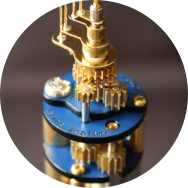
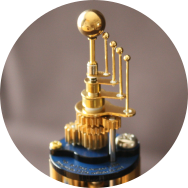
What is vitro jupiter ?
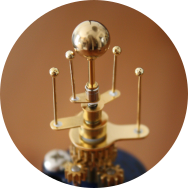
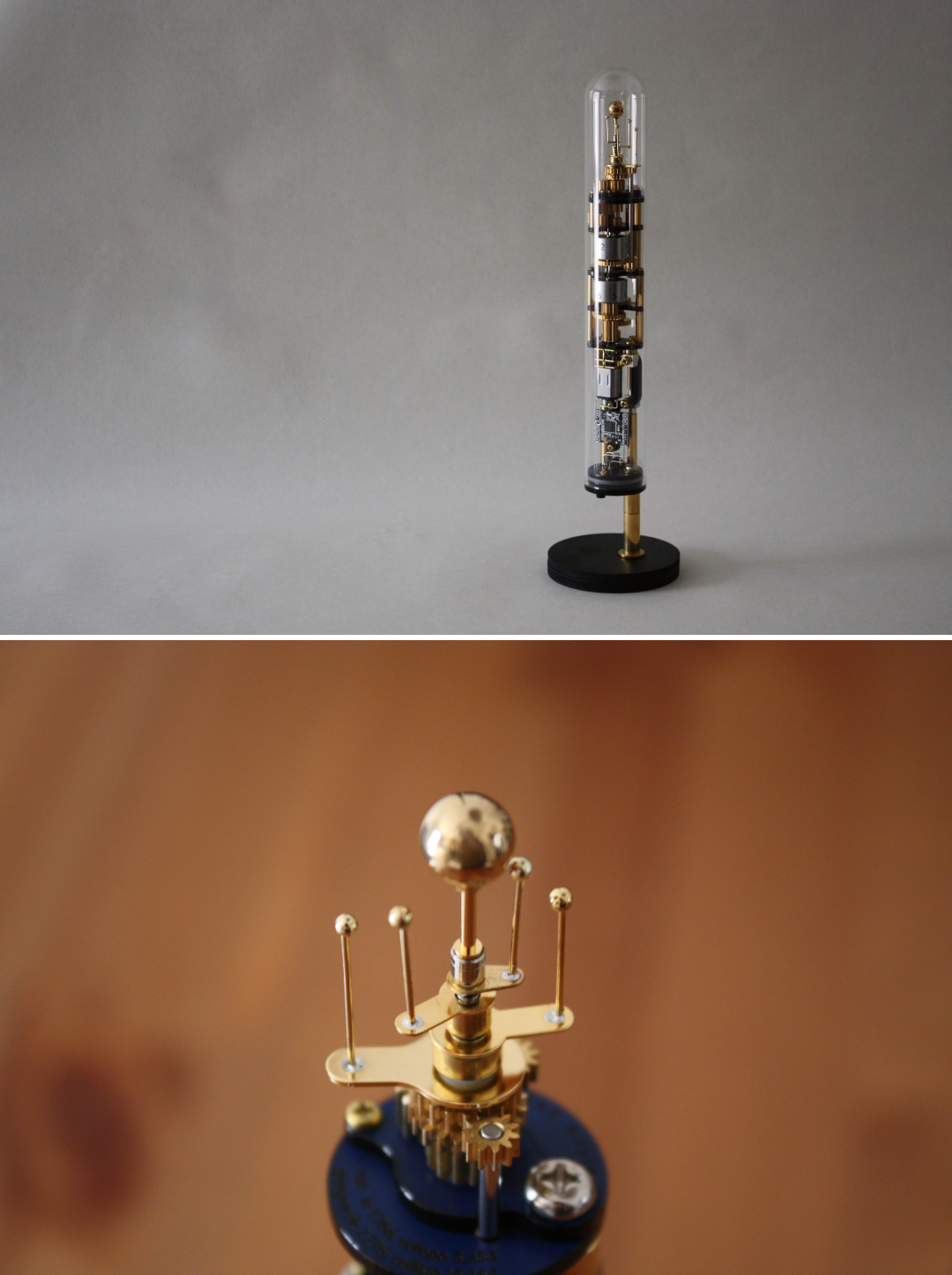
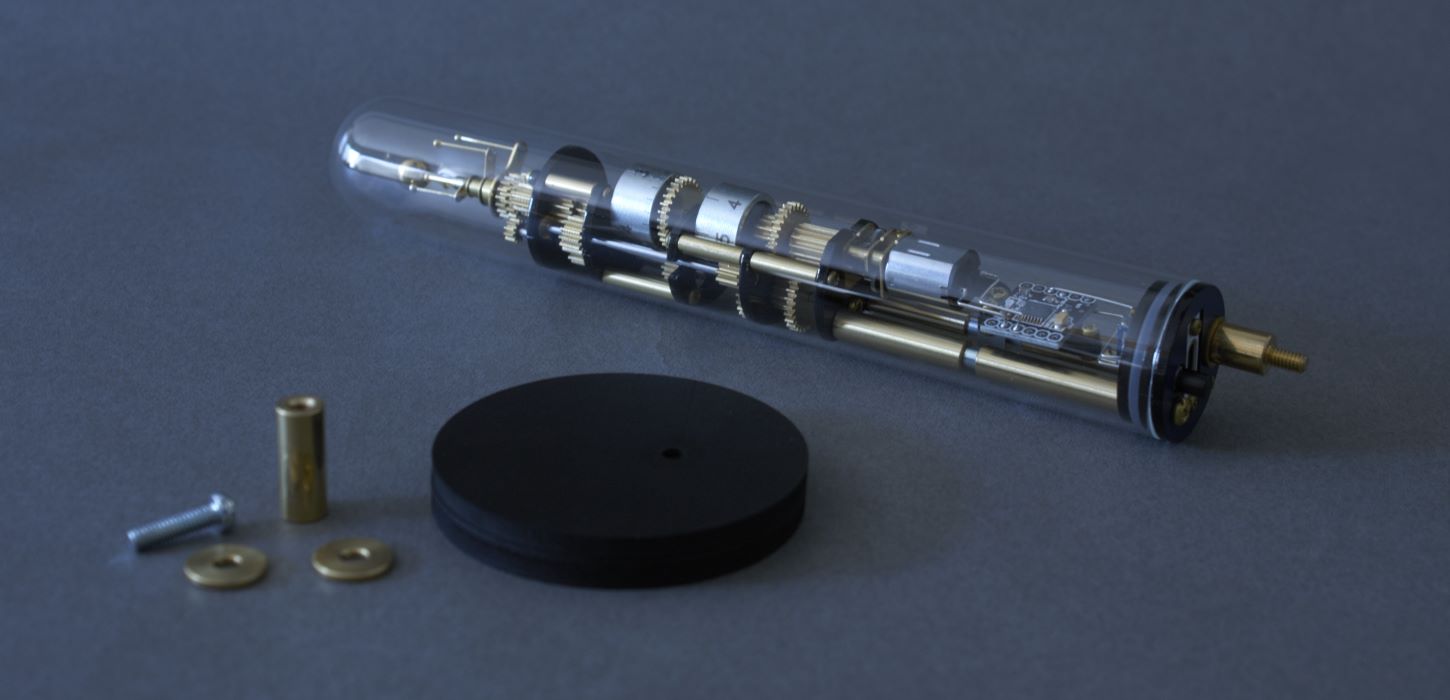
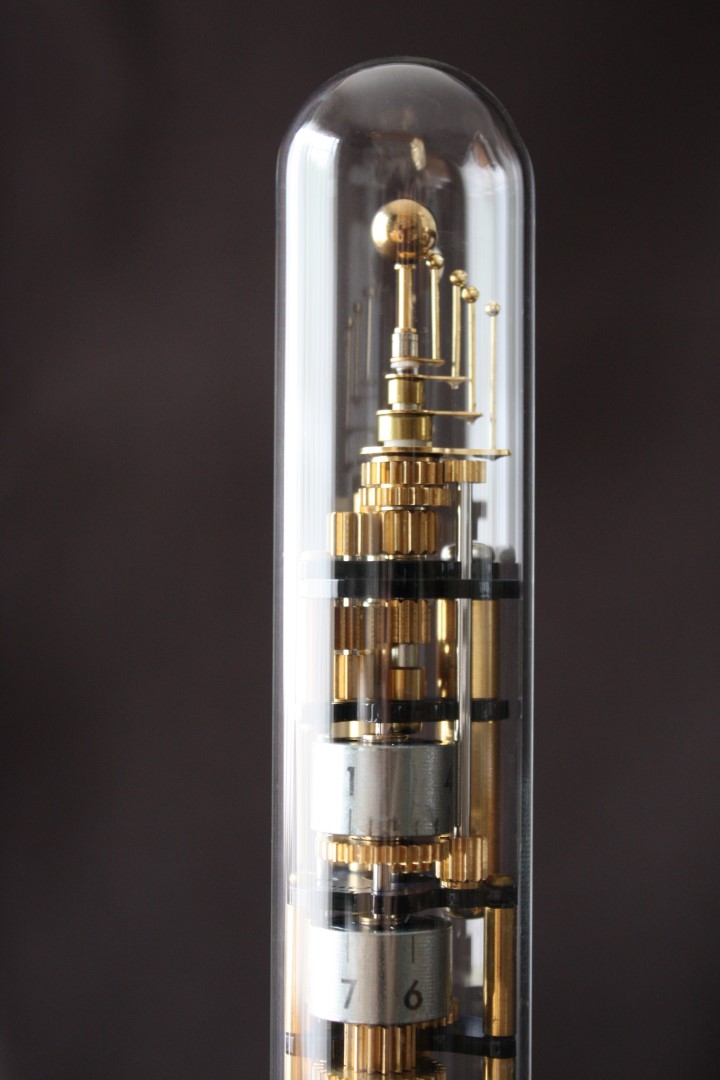
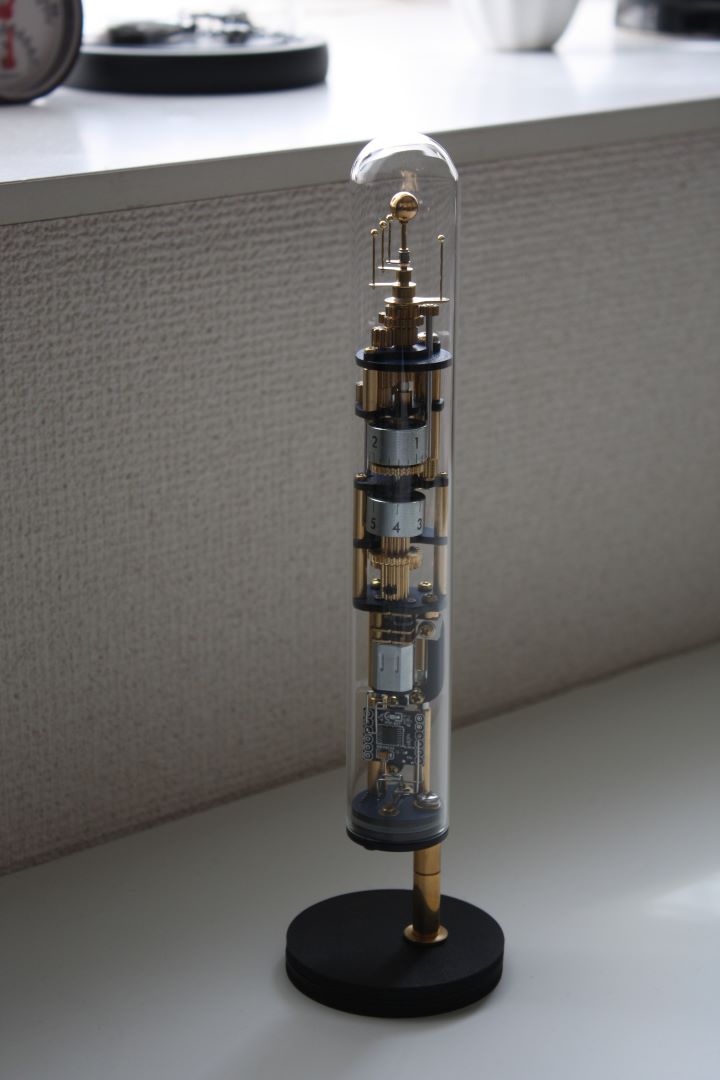
A rotating orrery of the Jovian system enclosed in a glass test tube.
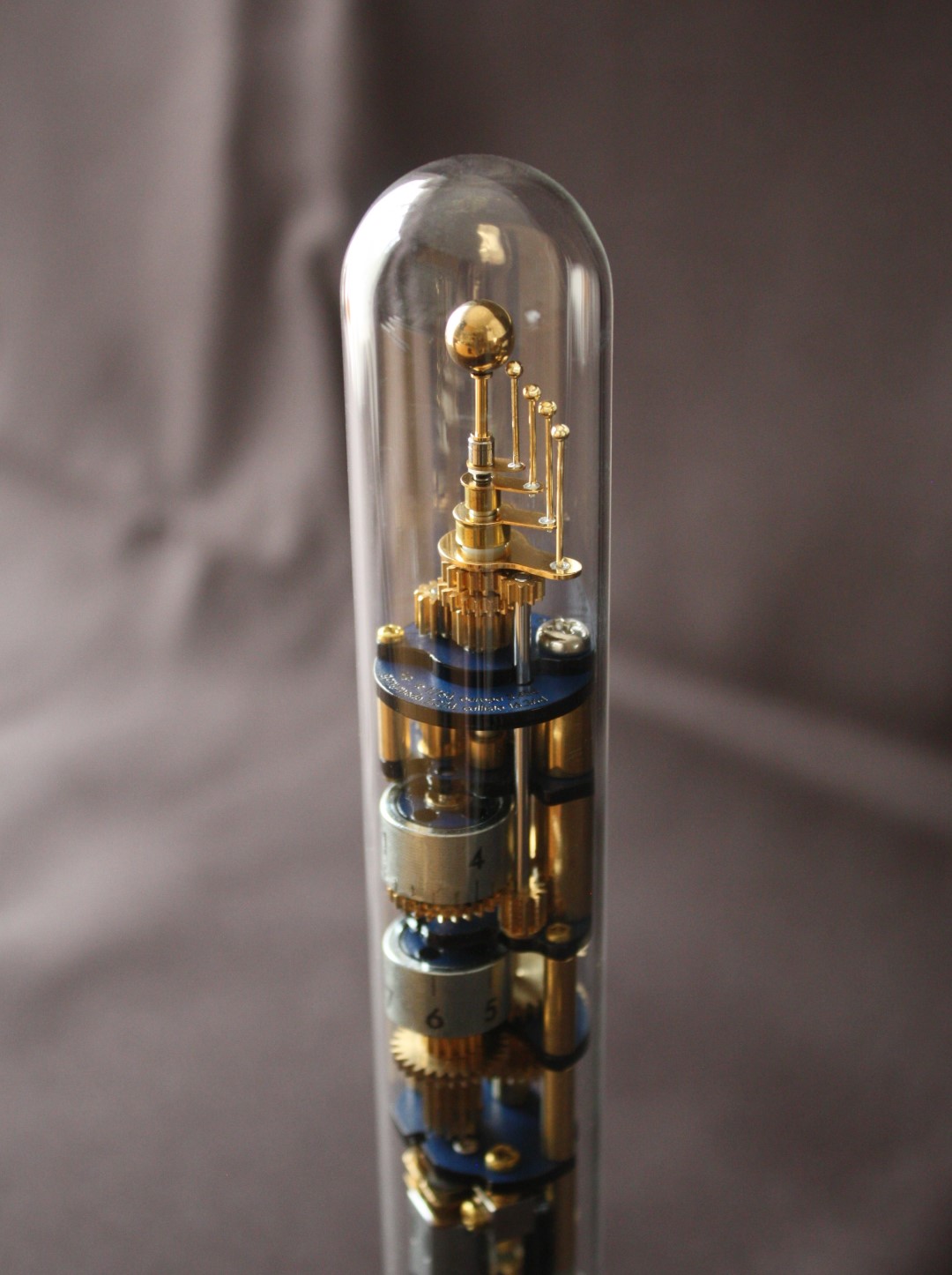
Brass gears recreate the orbital motions of Jupiter and its Galilean moons.
recreated inside a test tube
featuring brass gears
DIY Kit and Assembled Model
About vitro jupiter
Later, we developed prototypes of “Moons Landscape”, astronomical models of the Martian and Saturnian systems powered by quartz movements. While presenting these prototypes at exhibitions and other events, we received many requests for a model of the Jovian system. We also learned that customers were concerned about the price and wanted something with the accessible, easy-to-understand appeal of “Stellar Movements”.
Although “Moons Landscape” never reached the production stage, the knowledge and experience gained through its development led to “vitro jupiter”.
Based on four key concepts — a compact version of “Stellar Movements”, affordability, a smaller initial investment, and a shorter development and production period — “vitro jupiter” revisits and reimagines the test-tube orrery concept that was put on hold in 2021.
The development and prototyping process took approximately five months. However, the product brings together everything we have learned since 2020, making it a worthy successor to “Stellar Movements”.
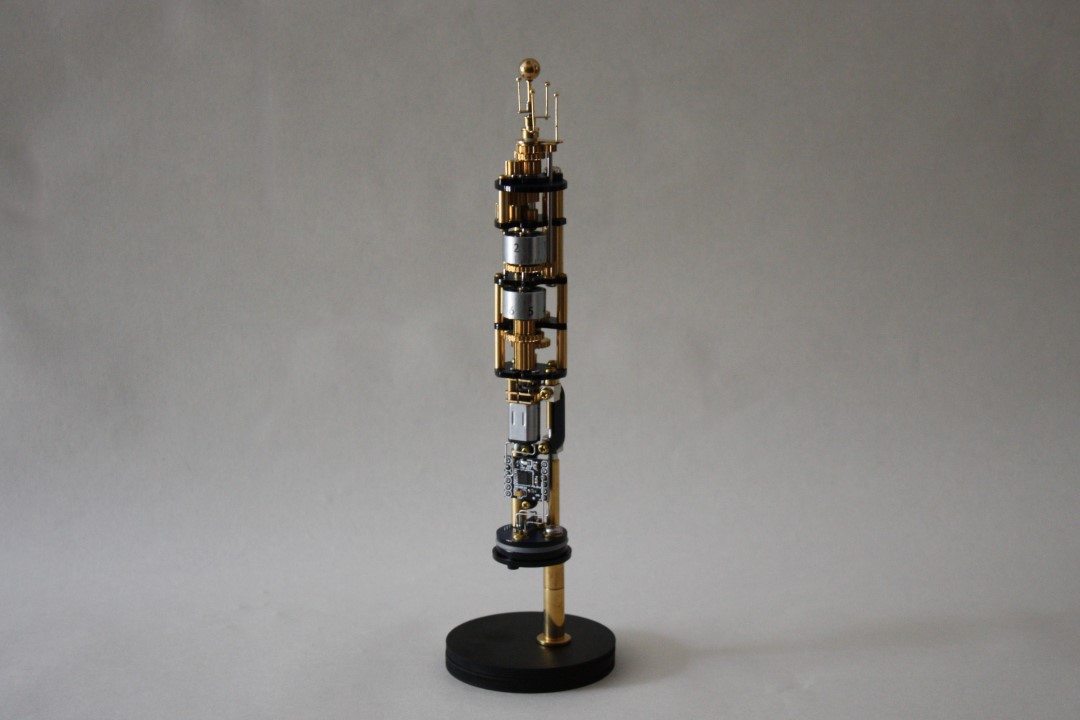
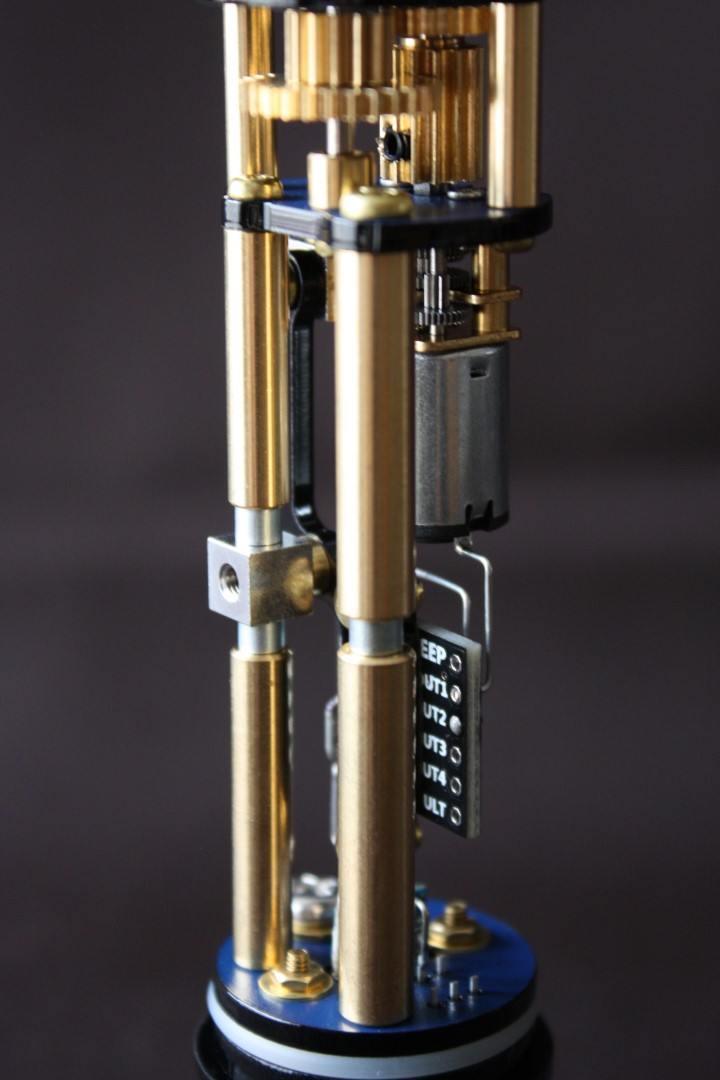
Although “vitro jupiter” is smaller in scale than “Stellar Movements”, it makes use of brass gears — something we were unable to achieve with its predecessor. This allows us to bring out the substantial, distinctive beauty of solid metal.
There is also something reminiscent of a submarine about watching the gears move within the enclosed world of the test tube. It evokes a sense of romance and adventure.
I remember being surprised when I once observed Jupiter through a telescope and found that its Galilean moons appeared even more clearly than Jupiter itself.
The moons, which looked almost like tiny toys, seem to have been brought here and enclosed in a test tube. That is one of the things I find especially appealing about “vitro jupiter”.
Six Key Features
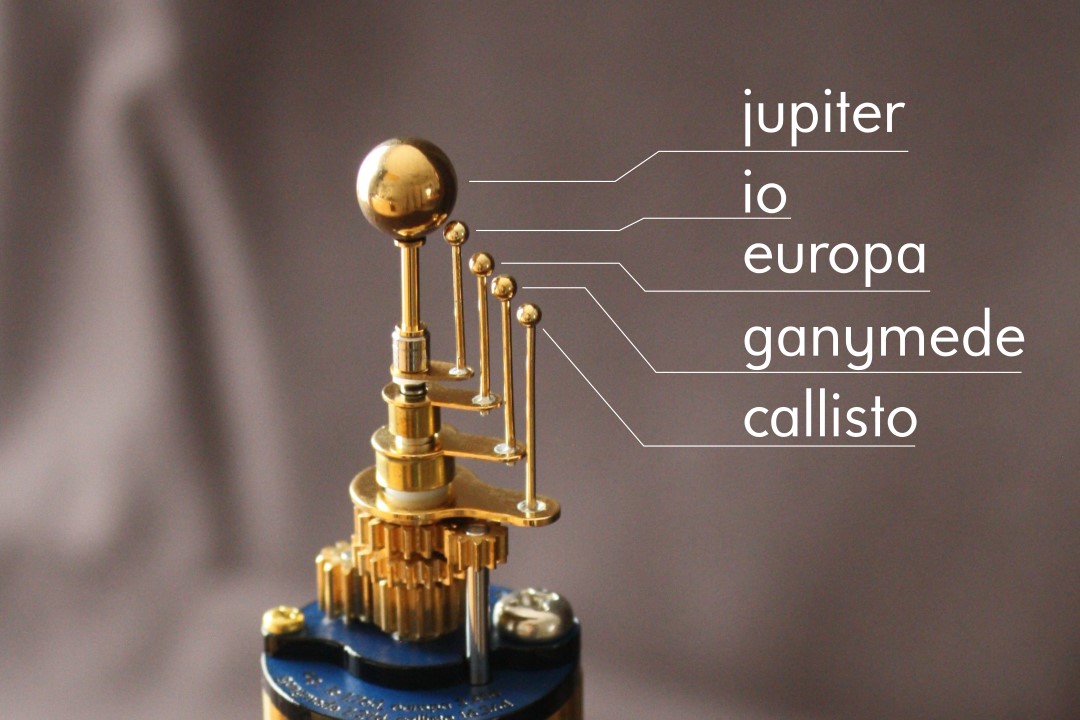
— 1. The Jovian System
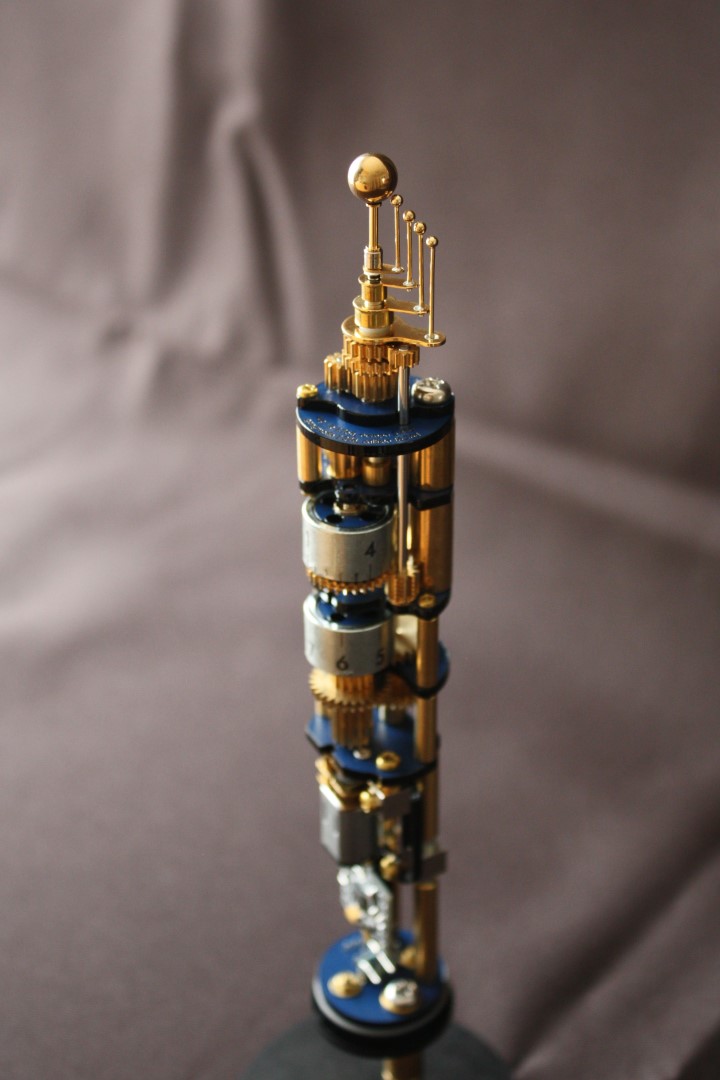
Io, Europa, Ganymede, and Callisto orbit around Jupiter.
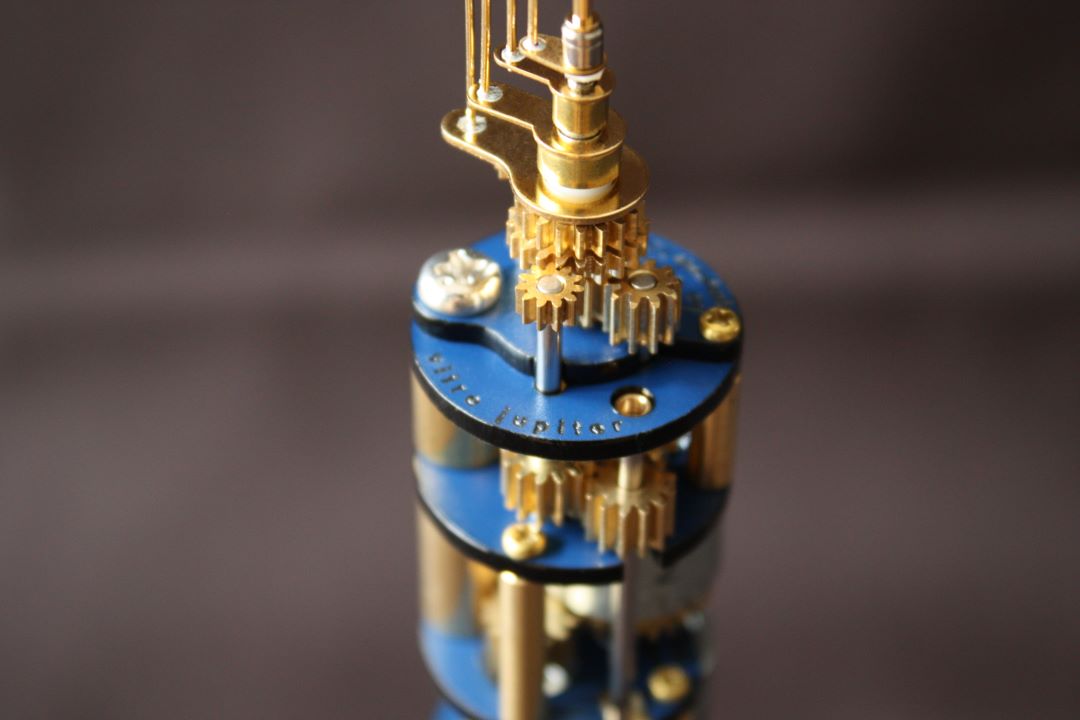
The orbital period of each moon is also engraved on the top plate.
— 2. Time Scales
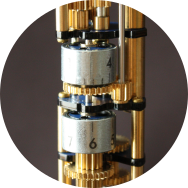
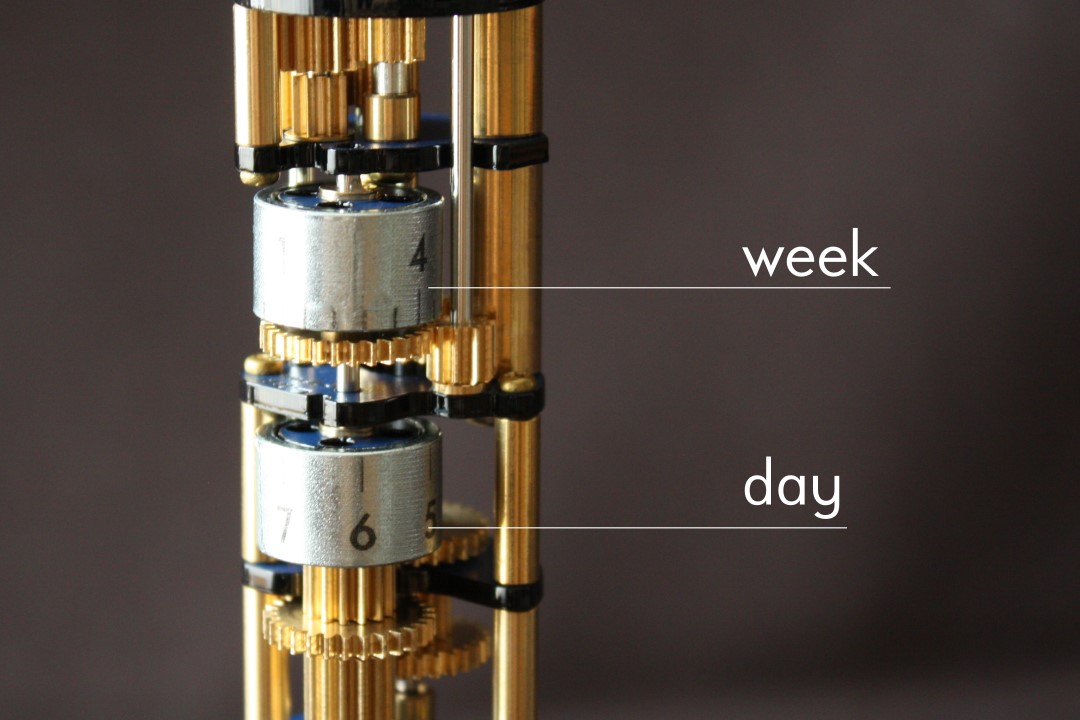
The orbital motions of the Jovian system are represented using two Earth-based time scales:
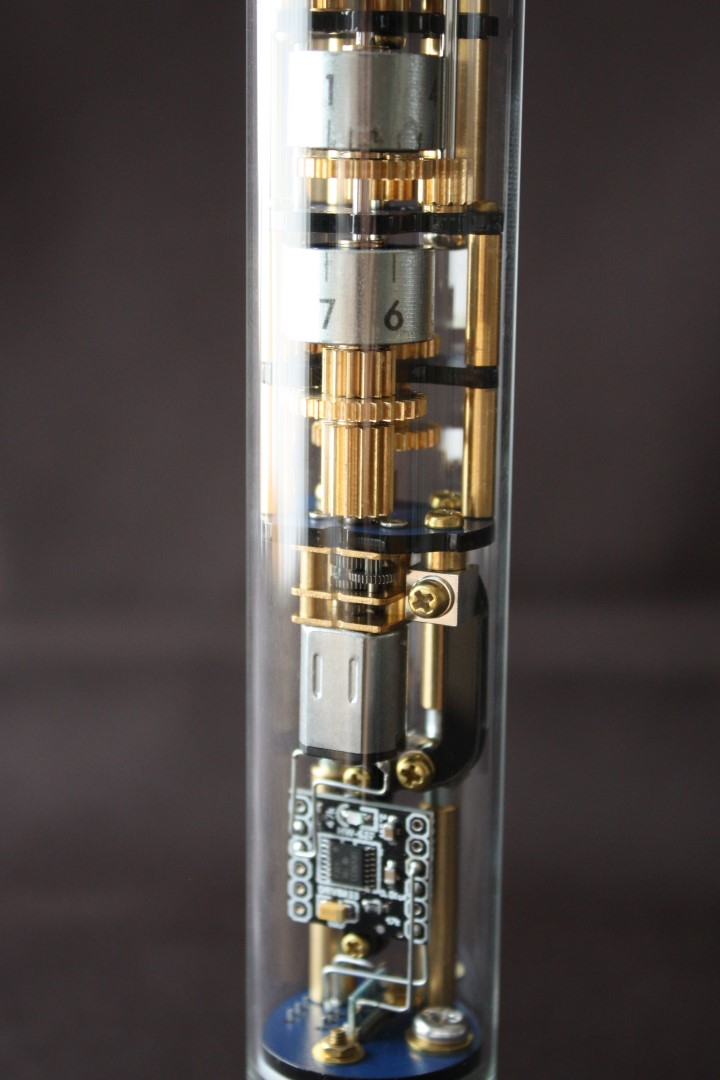
– Day: One graduation represents one day; one complete revolution takes seven days.
– Week: One graduation represents one week; one complete revolution takes four weeks.
— 3. Drive Mechanism
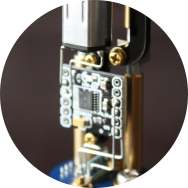
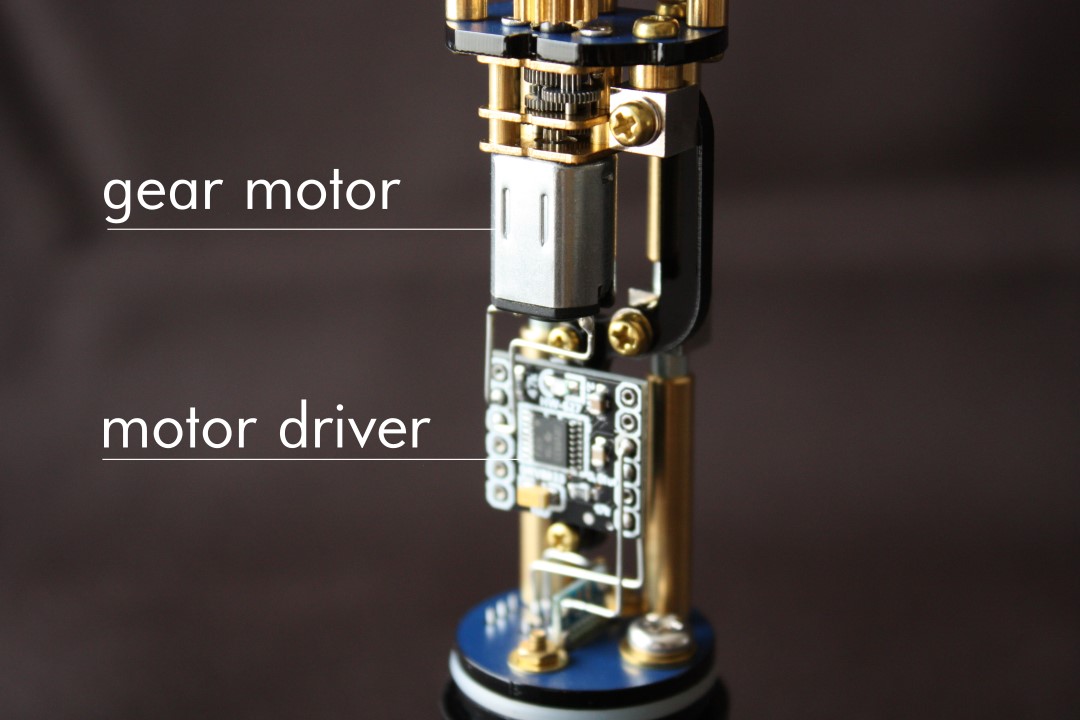
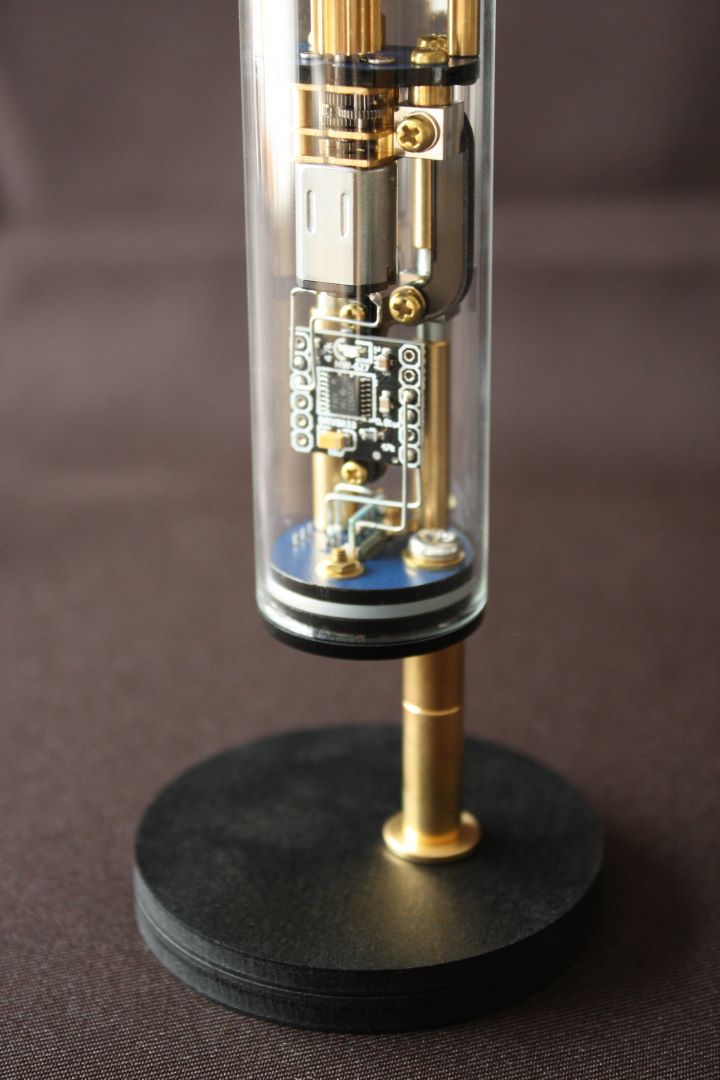
A geared motor is driven through a motor driver.
— 4. Switch and Power Supply
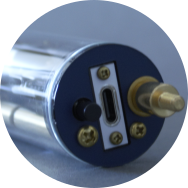
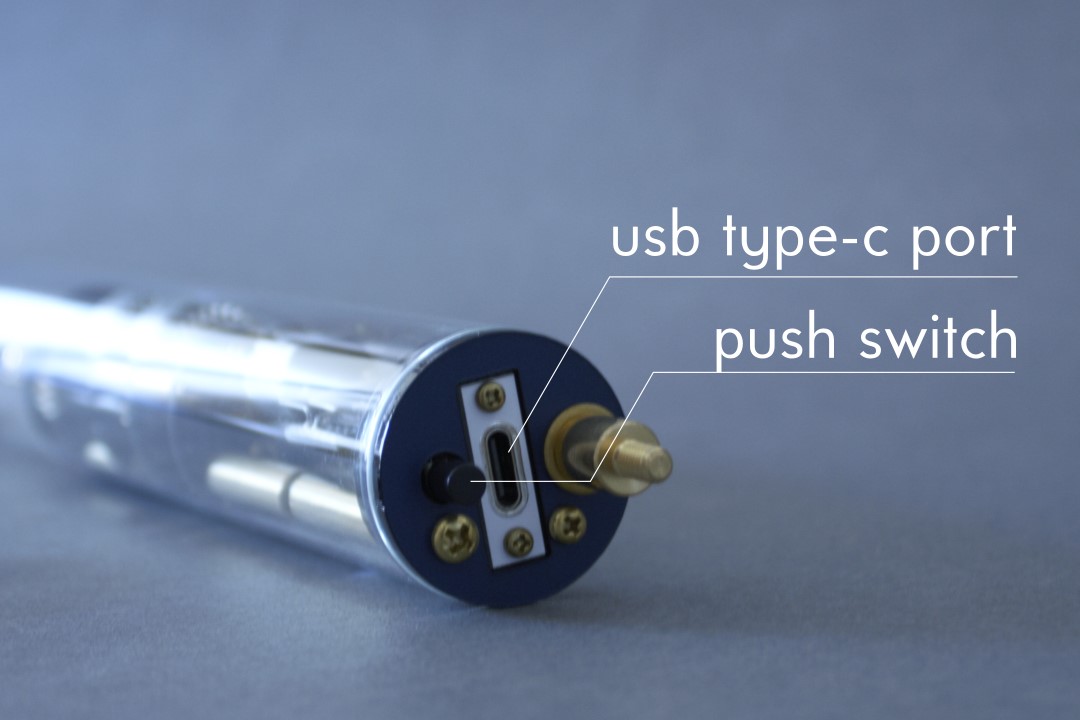
The power can be switched on and off with a single push switch.
Power is supplied through a USB Type-C port.
— 5. Stage
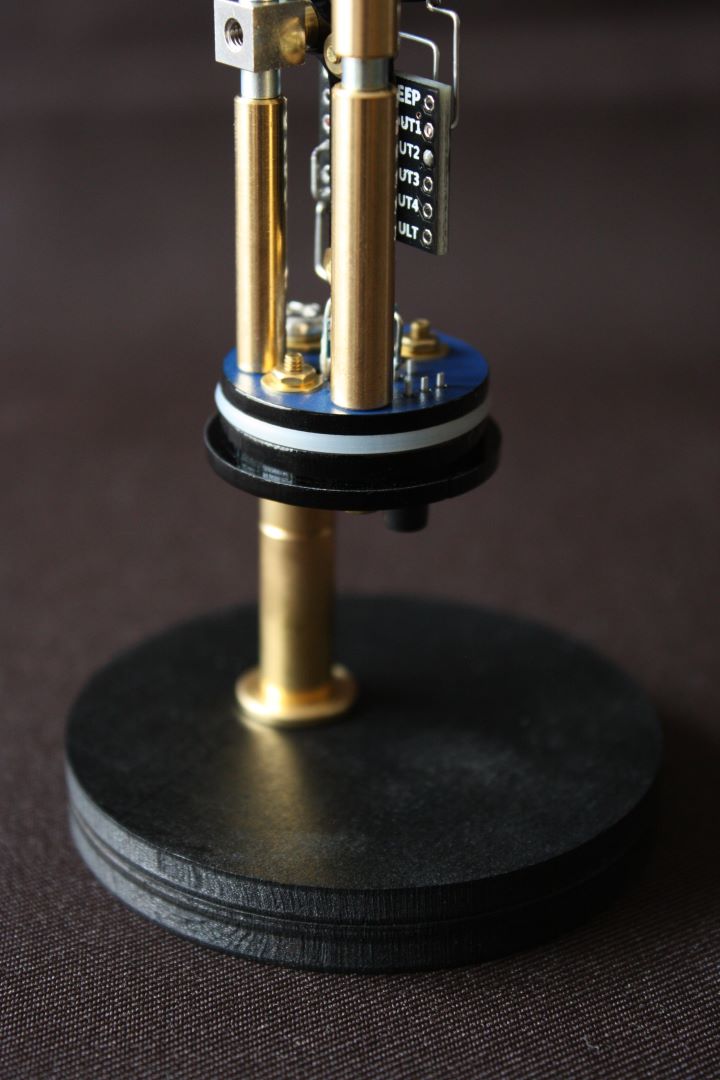
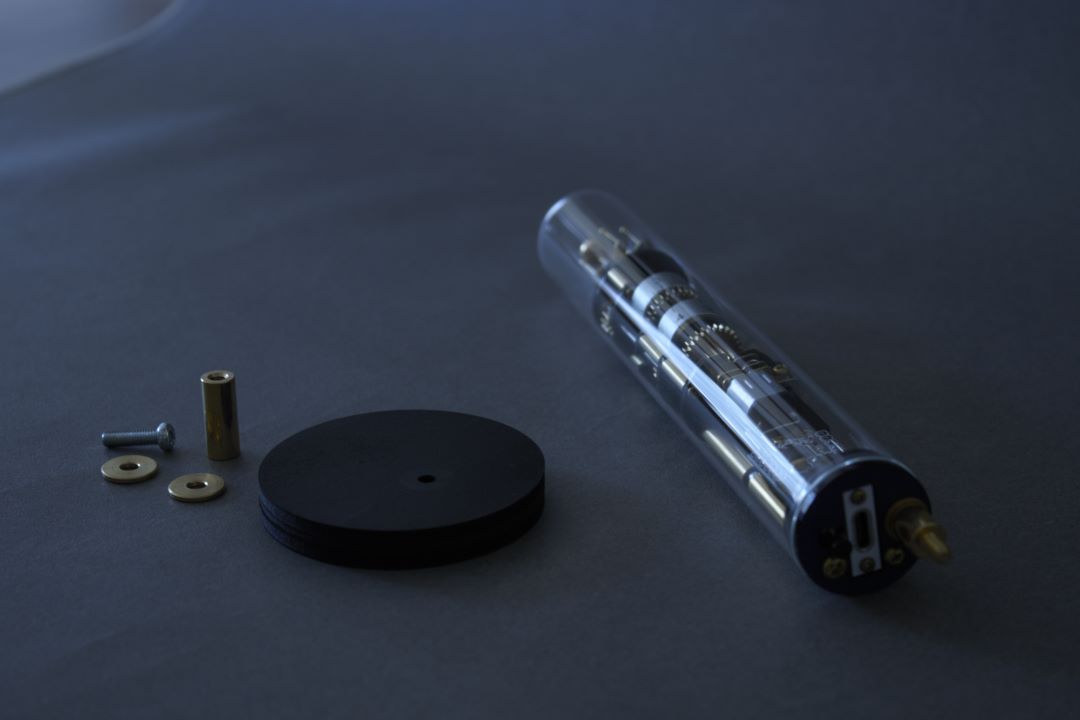
The wooden base supports the model and is attached to the main body with screws.
— 6. Glass Test Tube and Brass Gears
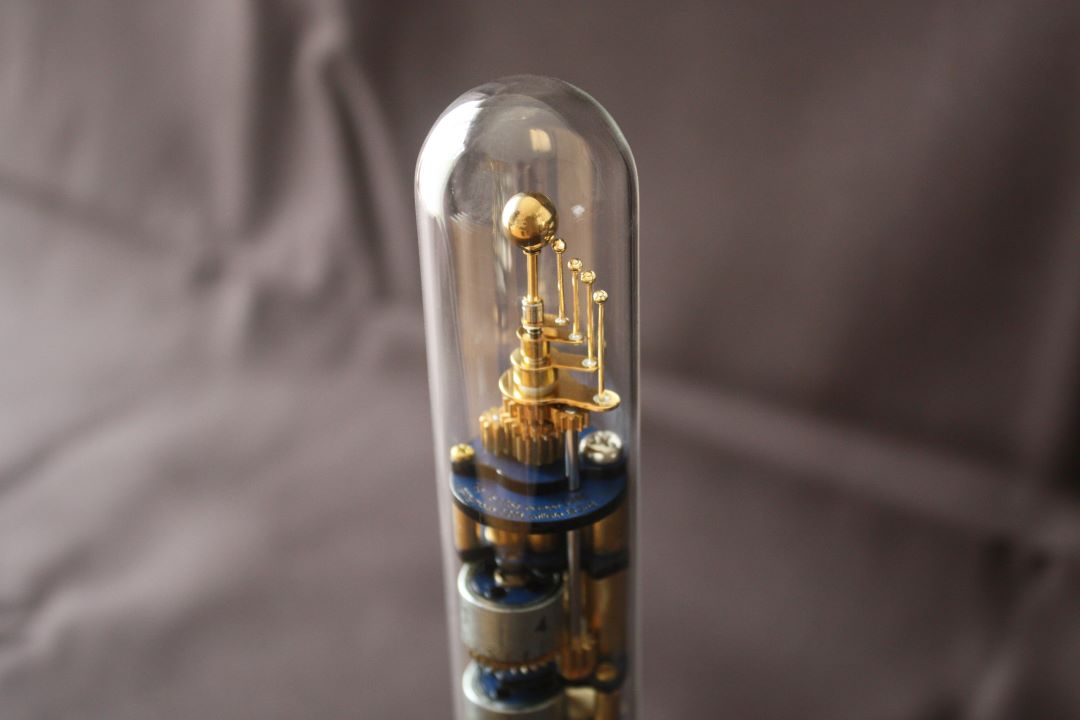
The model uses a 30 mm-diameter glass test tube, providing both dust protection and a clear view of the internal mechanism.
By incorporating brass gears throughout the mechanism — something that was difficult to achieve in our previous models — we have brought out the distinctive, substantial beauty of brass.
Specifications
| Size | Φ64 × 246 mm |
|---|---|
| Weight | Approx. 220 g |
| Materials | Brass, glass, steel, acrylic, plywood |
| Orbital Period Accuracy | Approx. ±3% (based on one graduation on the Day scale) |
| Power Cable | Right-angle USB Type-C cable (sold separately; USB Type-A on the AC adapter end) |
| Available Versions | Assembled Model |
DIY Kit
The DIY Kit
allows you to assemble the gears and mechanical components from scratch.
Coming soon
How to Use and Enjoy vitro jupiter
Names of Parts
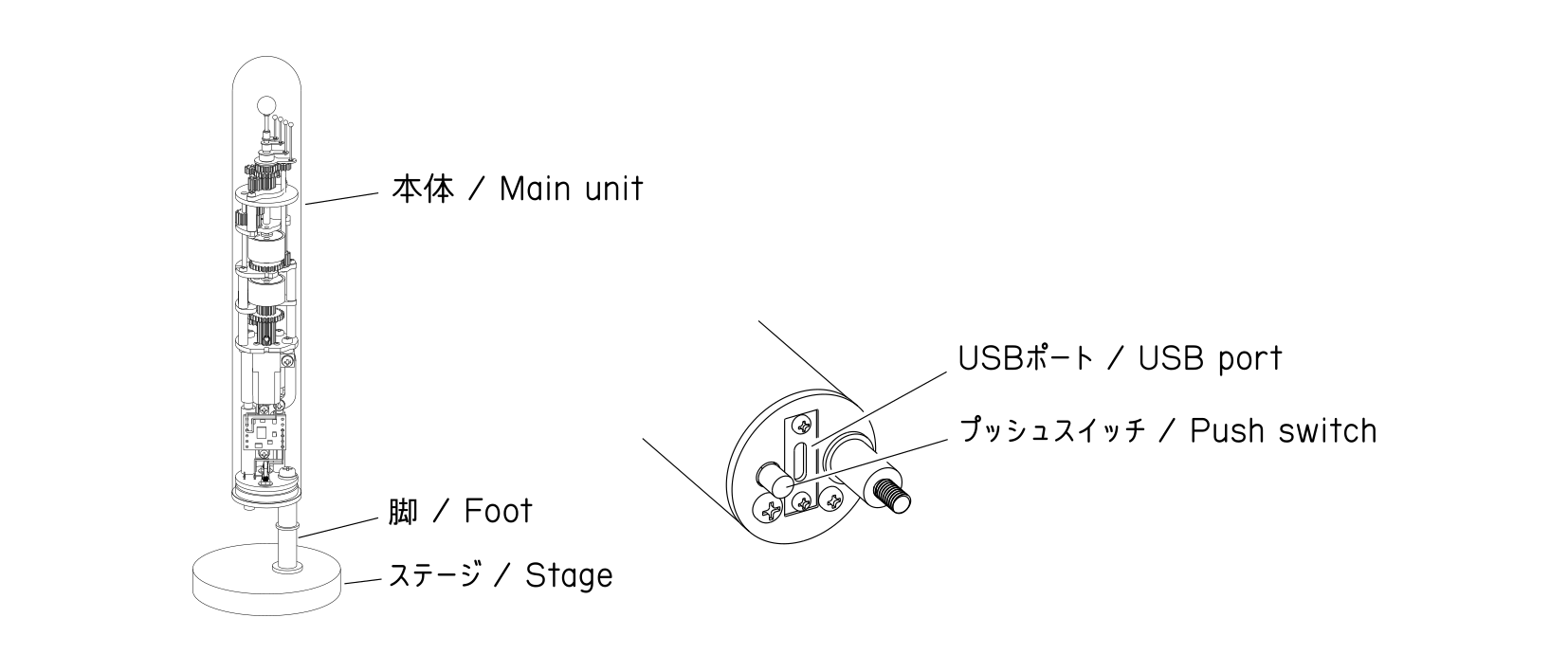
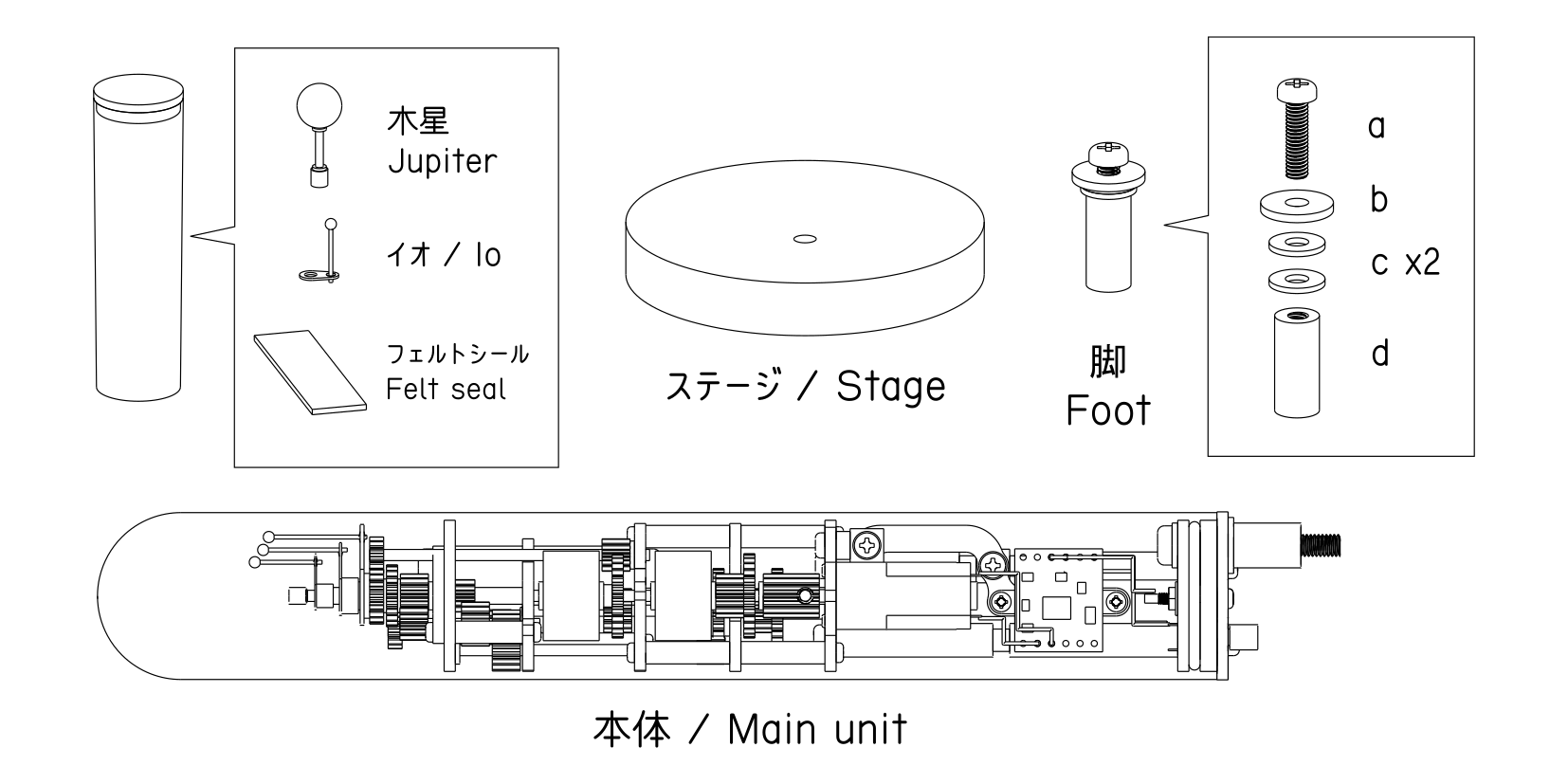
Package Contents
The package includes the following items.
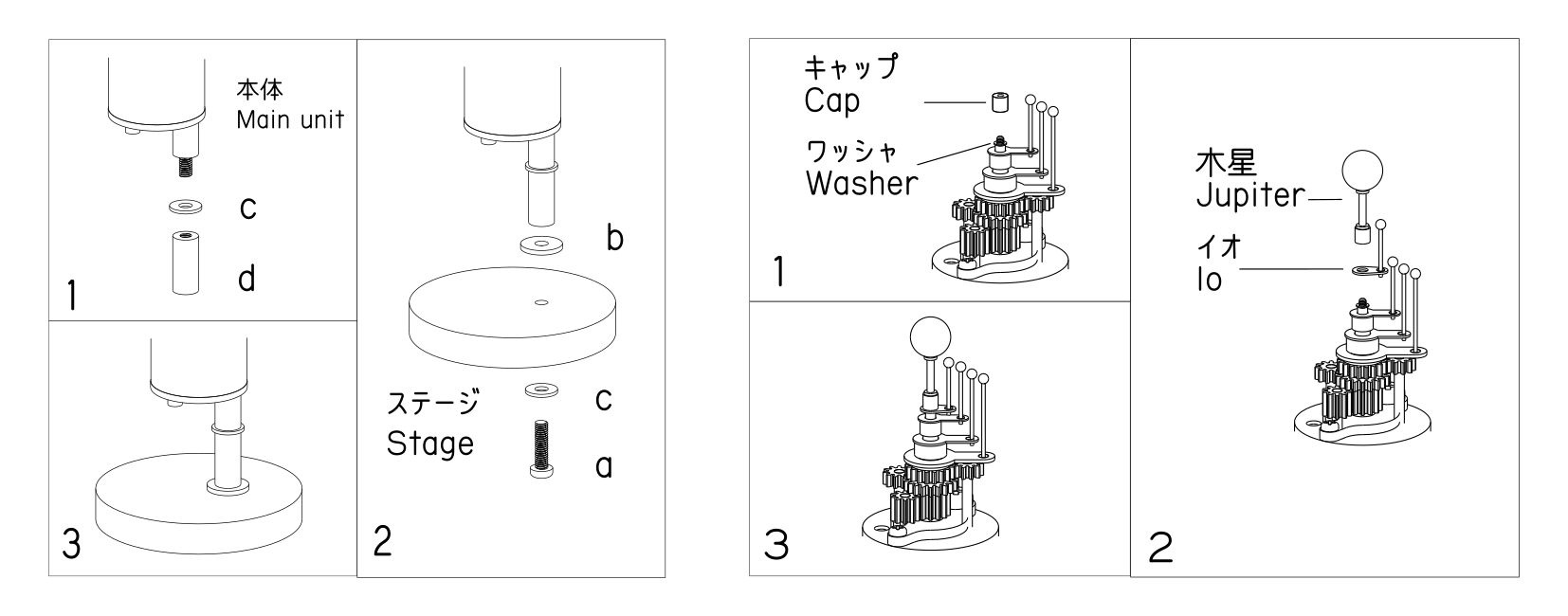
Assembly Before Use
1. Attach Foot “a–d” while adjusting the main unit so that it is positioned in the center of the base. Tighten screw “a” with a Phillips screwdriver.
2. Remove the glass test tube and the cap at the top. Attach Jupiter and Io. Io can be installed in either orientation. Once they are in place, reattach the test tube as it was originally installed.
How to Operate
1. Connect a right-angle USB Type-C cable to the USB port, then press the push switch to turn on the power. Press the switch again to turn it off.
2. The four Galilean moons will orbit Jupiter. You can observe their orbital speeds using the two Earth-based time scales:
– Day: One graduation represents one day; one complete revolution takes seven days.
– Week: One graduation represents one week; one complete revolution takes four weeks.
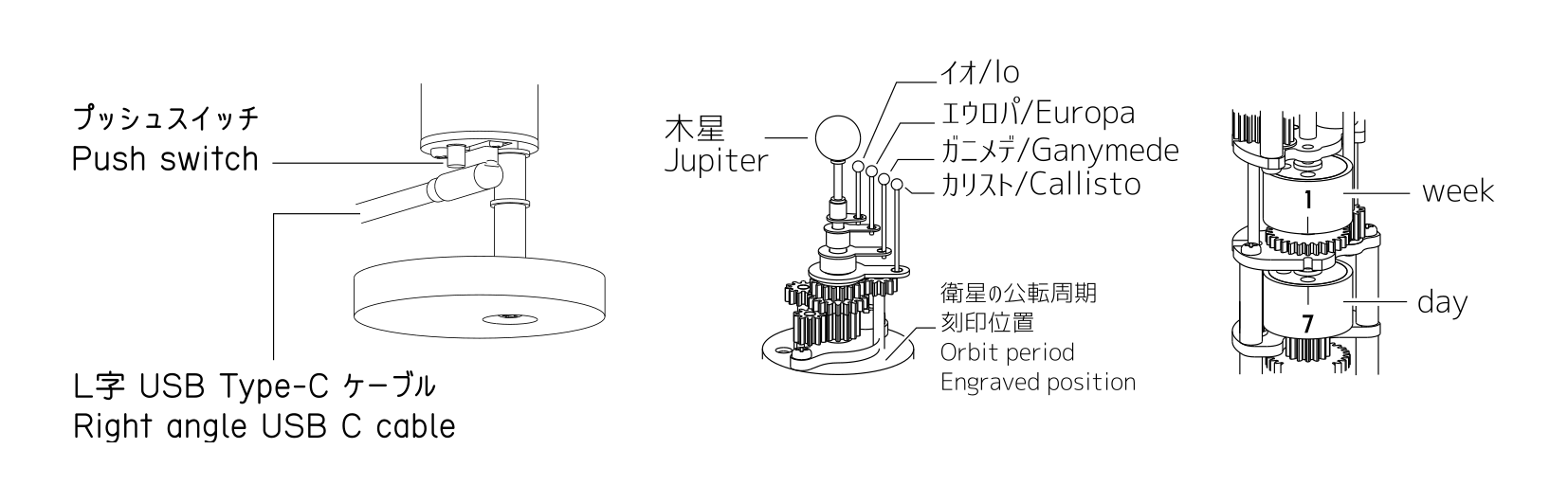
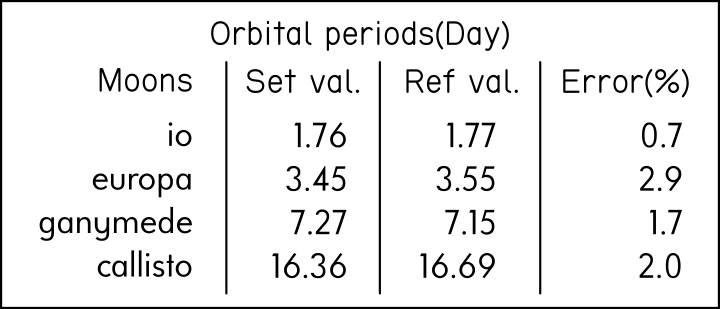
Orbital Period Table
The orbital periods of the moons in “vitro jupiter” are configured according to the table below, using one graduation on the Day scale (one Earth day) as the reference.
The standard orbital periods are nearly identical across different reference sources. For example, please refer to the information on the Galilean moons.
Notes and Precautions
– Please note that USB Power Delivery (USB PD) cables with USB Type-C connectors at both ends cannot be used.
– If the operating noise is noticeable, cut a felt pad into four pieces and attach them to the bottom of the stage. Placing the model on a vibration-absorbing mat, such as a rubber mat, can reduce the operating noise further.
– The test tube is made of glass. Handle it carefully and avoid subjecting it to impact. If it breaks, take extra care to avoid injury from the broken glass.
Q & A
Q. Is a USB cable included?
A. The right-angle USB Type-C cable is sold separately. If you purchase it together with the model, it will be included in the same shipping box at no additional shipping cost.
Q. Does the model keep time in sync with real time, like a clock?
A. No. The model does not correspond to actual time. Instead, it uses a relative time scale in which one graduation on the Day scale represents one Earth day.